Annual review
Annual Review 2006
The chairman’s review of the season as published by the association.
| Annual Review 2006 | ||||||||||||||||||||||||||||||||||||||||||||||||||||||||||||
| CH. M ZAKA ASHRAF | ||||||||||||||||||||||||||||||||||||||||||||||||||||||||||||
| (Chairman) | ||||||||||||||||||||||||||||||||||||||||||||||||||||||||||||
| Distinguished Members: | ||||||||||||||||||||||||||||||||||||||||||||||||||||||||||||
| I am pleased to present you the annual review of the Pakistan Sugar Mills
Association for the year ending 30th Sept’2006. This AGM coincides
with the conclusion of the two-year term of the Chairman and the Central
Executive Committee of the management at the Centre as well as at the Zonal
level for the session 2004-2006. As a result of elections Chairmen and the
Management Committees for the Centre and Zones are received, which will
be announced at the end of this meeting for the term 2006-2008.
2005-06 The Year Under Review Production Unaware of the severe effects of the frost in the coming months, PSMA was optimistic in forecasting sugar production of just over 3.0 million tonnes against the domestic consumption estimated of 3.9 million tonnes. Continuation of the last year’s short production, the frost attack further deteriorated the situation. As usual, the sugarcane price immediately sparked the situation, with the result that sugar market started reflecting the production cost, which had always been a sensitive issue for the Government. Right in this meeting last year, a million tonne shortage of sugar was forecasted based on the official information for production of sugarcane crop. The need for the import of raw sugar was also ascertained to supplement the production. The severe frost attack on sugarcane crop in Northern Punjab and NWFP further disturbed the supply of quality sugarcane. Beside the above loss the lucrative business of Gur making flourished as the demand was high at home and Afghanistan seriously hurting the milling sector. Overall situation remained below average as 30.00 million tonnes of sugarcane was utilized by the mills to produce 2.58 million tonne of sugar, supplemented by 372,500 tonnes refined from raw sugar and a marginal addition of only 8,700 tonnes from beet. Thus the total production was registered at 2.964 million tonnes, apparently below 50% of the production capacity of the mills, thus Pakistan experienced second crop disaster in a row. Sugar Price Structure & Crises The Government of Pakistan supports the cane production by setting a market support price announced before or after planting. The local demand is always above the minimum price fixed as a result mills renegotiate the procurement price. Provincial Governments in 2005/2006 increased the official cane purchase price for 40 kilograms to Rs 45/- for Punjab & NWFP and Rs. 48/- for Sindh. Sindh Government later revised this price to Rs. 60/-. However, during the entire season the price fixation remained a volatile issue between the growers and the millers. The growers refused to sell the cane at the official price and millers in some areas of Punjab and Sindh were forced to delay the start of crushing season. The milling sector ended up bearing the bulk of the risk when the circumstances changed. While the support price varies significantly when there is shortfall during a particular harvest, there is no similar level of adjustment when the harvest is good and cane is in abundant supply. With intermittent stoppages the season’s cane price averaged to Rs. 80/- in Punjab and up to Rs. 95/- in Sindh province resulting in a significant rise in the production cost to above Rs. 32/- to 34/- per kg without addition of 15% sale tax which was immediately reflected in the market sentiments and retail sugar market shot up to Rs. 38/- to Rs. 40/-. The unprecedented increase in the minimum support price in the province
of Sindh triggered the situation in the whole country. Increase of sugarcane
price twice in the same crushing season by about 50% encouraged the growers
to further dictate cane prices and cartel supplies. The disturbance in the sugar market was immediately noticed by the Government concerned authorities who labeled the millers as profiteers involved in cartel under declaring the sugarcane procurement and production of sugar. The Government was candidly informed of the situation and the deficit of sugar for the season to arrange import of the required quantity of the sugar, who beside allowing duty free import of raw and refined sugar approved import of about 850,000 tonnes of sugar by TCP for sale and distribution through Government managed outlets, with an obvious objective of subsidizing the sale to bring the market prices down. The unlimited import of refined sugar to the tune of 1.5 million tonne along 0.5 million tonnes of raw sugar already refined has now converted the 1.0 million tonnes deficit year into a million tonne surplus year. The situation thus developed hampered the economy of all concerned and
the over sensitiveness has resulted the year ending with large stocks
held by TCP, Mills and by the traders who imported sugar at high price.
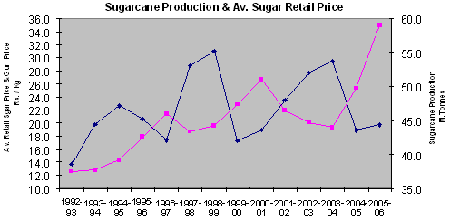
After the hectic meetings at PSMA and with the concerned Government officials some of the restrictions have eased down. Government intervention through bringing down the import duties, subsidizing the supplies through its outlets and blaming the industry hardly matters without taking necessary measures to support production of a better crop in a competitive environment. Past experience and record shows that the sugar price has been moving up and down inversely proportional to the quantum of the sugarcane and same was the affect on the price of Gur where no factories are involved, contains impurities and remains tax free. The graph hereunder clearly indicates that the factor controlling the sugar price is the quantum of sugarcane, the main raw material. Sugar production totally dependent on the sugarcane production has always reflected the weak link in the overall value chain. |
||||||||||||||||||||||||||||||||||||||||||||||||||||||||||||
| Pakistan Sugar Mills Association Sugarcane Production & Av. Sugar Retail Price |
||||||||||||||||||||||||||||||||||||||||||||||||||||||||||||
|---|---|---|---|---|---|---|---|---|---|---|---|---|---|---|---|---|---|---|---|---|---|---|---|---|---|---|---|---|---|---|---|---|---|---|---|---|---|---|---|---|---|---|---|---|---|---|---|---|---|---|---|---|---|---|---|---|---|---|---|---|
|
||||||||||||||||||||||||||||||||||||||||||||||||||||||||||||
 |
||||||||||||||||||||||||||||||||||||||||||||||||||||||||||||
OUTLOOK 2006-2007 Per data provided by the MINFAL there is 14% increase in the plantation
area of sugarcane. Cane production had dropped significantly in the past
two years in a row limited to 44 million tonnes. The increase in the plantation
area along promising weather conditions i.e. supply of irrigation water
& rains sugarcane production is expected to over 50 million tonne
which ensures increase in the sugar production to about 3.5 million tonnes.
Government of Punjab has already announced indicative minimum price of
sugarcane as Rs.60/40 kg, which means that delivered price at the mill-gate
with the inclusion of transportation, cess and price competition would
be around Rs.70/40kg on average. Sindh Government has also recently announced
Rs. 67/40kg and NWFP Rs. 65/40kg.
Whereas the industry bears a strong feeling to pay better sugarcane prices to ensure a better sugarcane crop in future there is confusion as how to maintain a balance in the minimum indicative price and a matching production cost. Government has been approached at several occasions explaining these issues of utmost importance. Despite these hurdles government of Sindh has already issued directions for an early start of crushing on 1st Oct’2006. As a regular phenomena every year millers are pressurized for an early start of the crushing with the plea to vacate some portion of the land from sugarcane for the sowing of wheat, whereas the millers resists to accept the plea for the reason that the sugarcane quality at the early season is of very low recovery, the fact is very well known to the all concerned Ministries and the growers as well who irrespective of the facts force for the early start as the payment system of sugarcane has still continued based on the weight and not the quality. Per our estimates early start of the sugar mills with the low recovery is causing a loss of minimum 150,000 tonnes of sugar costing mills billion of rupees, which is a phenomenal loss to the industry and the country. Overlooking the technical and the positive aspects in favour of the late start, the main cause can be spelled out as the row between the Growers and the Millers over the price hike and the non- availability of the crop. Shortage and the immaturity of the crop in the beginning normally results the early closure of the season at the higher recovery period. An adverse step for achieving the optimum production. |
||||||||||||||||||||||||||||||||||||||||||||||||||||||||||||
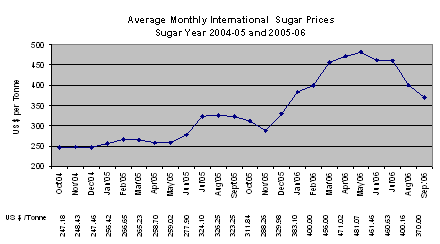
| International Scenario: - The leading analysts had been changing stance on the world sugar production and consumption and as the year went by the deficit gap was closing. On average considering these report the production 2005-06 | ||||||||||||||||||||||||||||||||||||||||||||||||||||||||||||
 |
||||||||||||||||||||||||||||||||||||||||||||||||||||||||||||
| remained within 148-150 million tonnes against the consumption of 149-151
million tonnes. The continued deficit and imbalance in demand and supply
kept the prices significantly stronger during the year (See table below)
While the high white sugar prices deterred its import more and more attention
was diverted towards the raw sugar, which prompted a higher premium and
soon the import of raw sugar for processing was no more profitable. Instead
the exporters who could export both the refined as well as raw started giving
preference to exporting refined sugar. Brazil and Thailand both switched
to more attracted option by increasing the export of more white sugar. Later the Sugar prices in the International market started sliding down due to big global supply and soft demand. The prices sunk by almost 25% since July’06 after touching US$ 490/- a tonne down to US$ 370/- in Sept’06. The prices started ascending in Nov’05 right at the beginning of the season 2005-06 from US $ 288/-, apparently over Speculations and sudden large demand. London white sugar featured peak in July when it hit record US$ 498/- a tonne. Raw sugar had its 25 years peak price of 20.46 US cents/lb at New York market in February with the news of drought in many sugar producing countries. The prices rose and tumbled sharply during the year. 2006-07 Global production estimates for the year 2006-07 shows a surplus of about 3.0 million tonnes against a similar amount of deficit last year (2005-06). The global stock/consumption ratio which has always played a pivotal role over the global sugar prices will remain low and could cause price rise in the future year for the 10% estimated production fall in Australia due to smut and the ongoing drought in the Central and South Brazil, which might reduce the season’s output as well as cane supply for sugar production. India is expecting its record sugar production of over 23.0 million tonne in the year and is about to lift ban on export of at-least 2.0 million tonne out of its surplus, unhappy over the fall of international prices now matching its production cost. EU sugar output is expected to fall from 22.0 million tonne down to 16.5 million tonne in 2006-07 due to E.U sugar regime reforms suggesting price slashing. Presently the world production is expected around 2.5 million tonne higher than the consumption for the first time since 2002-03. Consumption and stock ratio is expected to grow nominally to about 38.5% having significant affect on the prices. Conclusions
Following the discussion between the secretaries committee of Government of Pakistan comprising Secretary MINFAL, Secretary Industries, Secretary Finance, and Secretary Commerce held on 3rd and 4th Oct.’2006, the main points resolved were as under:-
With the start of the new sugar year 2006-07 we hope that Government of Pakistan and the Provincial Governments will take extensive research and development work for the sugarcane crop with the participation of PSMA to develop better yield & recovery and improve the economics of sugarcane growers by increase in per acre yield while the industry will be more competitive in producing more sugar due to the increase in sugar recoveries to meet the national demand. At conclusion I would like to thank the Zonal Chairmen and Members of the Central & Zonal Committees for their co-operation. At the same time I wish the new management of PSMA a success and assure them my co-operation. |
||||||||||||||||||||||||||||||||||||||||||||||||||||||||||||
|